As I mentioned in a previous post, I was debating whether or not to sign up for Ironman Cozumel. Well, sign up day arrived, I got caught up in the excitement and ended up pulling the trigger. The last time I raced an Ironman was 2006 in Hawaii. I’ve started to get the itch to do one again, so I am looking forward to getting back out there. Which brings me back to my main thought.
This is the time of year in which athletes and non athletes alike take some time to endulge in all the wonderful things that the holidays have to offer. With that brings a bit of guilt, and that rolls right into New Year’s and the infamous New Year’s Resolution. Year in and year out the number one resolution in this country is to workout more or to get in shape/lose weight. For many (including myself), this means committing yourself to an event such as a marathon (or an Ironman).
Gone are the days that you could decide to enter a major endurance event such as a marathon 30 days before the race. Marathons are filling up 6 months to a year out and Ironman races can sell out in as fast as 25 minutes, a full year in advance.
The drop out rate for the very popular marathon training programs are ridiculusly high. People sign up with great intentions, hit the ground running with some big runs early on and then burn out just as fast. The success rate would be much higher if people just approached it differently. They’re trying to eat an elephant in a few bites and we all know that’s not how it’s done. If you want to finish a marathon, you need to do it one mile at a time.
Here in the Houston area, where I live, most of the marathon programs start in early to mid July for the Chevron Houston Marathon that takes place in mid January. For the average recreational runner, 6 months is plenty of time to ramp up for a marathon, but many of those signing up are starting from stratch in July. Not a good idea, because you have to start covering some pretty big distances in a hurry, and that can be quite overwhelming.
I would suggest that if you think you want to run a marathon, start the training now, but start in very small doses. The key to success in any endurance event is consistency in your training, not how early you can go big. So, instead of trying to kill the world right away, spend the first few months just getting into a habit. Telling you to get out 3 times a week and run 1-2 miles each time for the first 4 months sounds a lot more palatable than to tell you that in just a few weeks you must be able to run 8 miles.
Same thing goes for intensity. There is no reason in the world that you need to hit the track and do wind sprints or interval work if you are trying to finish your first marathon. No one out there walking/jogging in the final miles on race day is wishing that they had done more speed work instead of endurance work. Plus, the rate of injury goes through the roof when you add intense workouts to your training program.
The same philosophy holds true with any endurance event, not just a marathon. If you decide you want to do the MS150 or local 100 mile bike ride, an adventure race, or the Ironman, take small bites from very early on. Because if you start too big, you are going to start to hate the training and there’s a good chance you won’t even make it to the starting line. What ever ‘mountain’ you decide to to climb, remember that it’s small steady steps that get you to the top, and that, “Joy is found in not finishing an activity, but doing it”.*
Happy Training.
As some of you may know, I ran in the Boston Marathon this year. It was an event I have wanted to experience, and with the birth of our second child, I thought the training would be more manageable than some of the other events I usually look to. Truth was that even with just one sport to train for, a newborn and a one year old in the house are just not very condusive to consistent training. Such as life. Didn’t expect to break my 2:41 PR anyway.
Most people seemed to be doing one of two things, either waiting in the longest port-a-can lines I’ve ever seen in my life, or sitting down trying to stay warm. For those who plan to do Boston, be aware there are no seats, so bring a blanket or something to sit on and you’ll be fine. After about an hour or so, it was time to head to the start.
I know that in our perfect, robot-like, utopian Ironman race it seems to make sense to put the biggest focus on the bike ride. It is longest event of the three afterall, so by improving your time on the bike will yield the best improvement overall. To some degree I can buy into that theory. It’s the biggest chunk of the race, so training for it should take up the biggest chunk of time.
On the run however, if the goal is to hold 8:30 per mile and you hit the wall, you’re walking, which is typically around 18+ minutes per mile. Now you are losing 9:30 per mile. If a good placing was the goal, your competition will eat your lunch in a matter of a couple of miles. If a good time was the goal of the day, tacking on 9 and a half minutes every 5280 feet will kill that personal best in a hurry. To put it another way, in the hour and a half it takes someone to put up 30 minutes on you on the bike, you will only need about 31 minutes to get all that time back on the run.
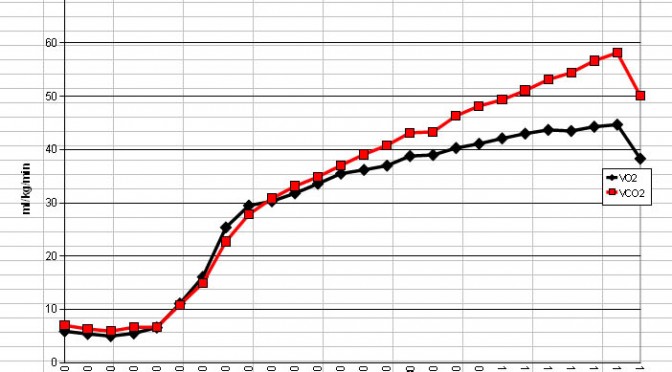
I see the base phase of training much different. I think base building is the most important phase for endurance athletes. It is a very focused training period in which you train almost 100% of the time in a very narrow window of aerobic effort. This window doesn’t include easy aerobic training nor does it include anything at anaerobic threshold or above. Basically (outside of warm up and warm down) you keep your effort right at or just below your aerobic threshold(AT). For those who use a heart rate monitor this means constantly keeping your heart rate in a range of 10 bpm where your upper ceiling is your aerobic threshold and you never get to your anaerobic (or lactate) threshold . So lets say your AT is 155bpm, then you want to train between 145-155 for your entire workout. Note: this doesn’t mean that this is your average for the workout, this means that if your heart rate hits 156, you slow down. Likewise, if you heart rate drops to 144 you must pick it up. For those who train without a heart rate monitor, this is roughly your Ironman race pace.