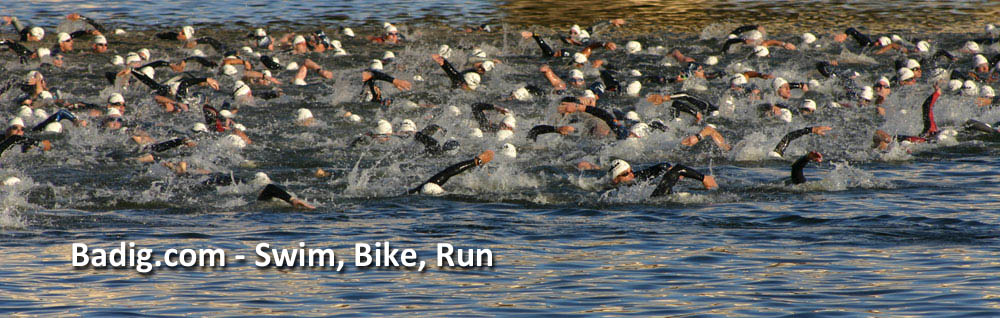
It seems that in all sports, the previous generations accomplishments get swallowed up by the next generation eventually. Swimming is no different. Take Johnny Weissmuller or Buster Crabbe, who at the time defined the sport of swimming. Heck, Johnny was Tarzan and Buster became Flash Gordon! Weissmuller won 5 Olympic gold medals and set 67 world records. If you look at his times though (23.0 in a 50 yard free and 52.0 for a 100 yard free), what once was the gold standard is now done in a daily workout by teenagers. His records were broken by the next generation, and the next, until Mark Spitz came along. Mark was another defining figure in our sport with his 7 gold medals and 7 world records in the ’72 Olympic games. His times now would barely even qualify him for the National Championships, let alone the final heat or the Olympics.
This evolution continues at all levels of sport as well, not just at the top. So what am I getting at? Why am I bringing this up? Well, this past weekend I watched the Texas High School State Swimming and Diving Championships, and for about the last 20 years, I have owned or co-owned two records at my old high school (200IM and 400 free relay). At the time they were set, I figured they might hang around for a few years tops. So for those records to be hanging around after all these years has been a nice surprise. That is until today. My IM record got slapped down by the next generation of good swimmers, and it wasn’t even close. In a way I was a little sad to see it go, but I was also really happy to see that swimming in our area was still really strong and growing. Congratulations Tripp. I guess it’s just time to accept the fact that I’m old and these guys have moved beyond my generation. Time to order that Hov-a-Round Scooter thing and learn how to play gin or dominos.
Well….almost. They missed the other record by .04. Ha! Maybe next year kids….
I was filming a friend of mine the other day (his post is in the hopper) and he thought that I should post my own swimming as a point of reference for others. While I have posted myself on here swimming before, I will admit it has been a while, so if you haven’t been hanging around here very long, you probably haven’t seen any of them. So here are a few shots of me making my way up and down the pool.
I don’t really feel like picking apart my own stroke in any great detail, but I will admit that my stroke does have flaws. Since I don’t slow down the video or point any of them out, most of you won’t see too many of them though. That works just fine for me, because if I let you peek behind the curtain to see the real wizard, then you won’t tap your ruby slippers together anymore…
For those of you who frequent this site (thank you by the way and tell some friends!!), you may have started noticing a theme here. I have been analyzing a number of people’s strokes, giving pointers, tips and things to avoid. The feedback has been well received and the requests have increased quite a bit as well. (Actually back logged right now if you can believe it). So as long as the requests keep coming, I will keep showing you various strokes and breaking them down. The other stuff is coming too, I just need about 30 hours in a day to get it all done right now. I digress…
OK, So I spent a little time with Mark and going over his stroke a while back. Mark has been a triathlete for a while now, so this isn’t the first time he’s hopped in a pool, and it shows. He has a good body position and a forceful pull. There are a few key things that I picked up on right away though. They are minor tweaks visually, but these changes will shave many, many minutes off of his next swim time. So I will hit each one in my order of importance.
The Pull: This is another good example of dropping your elbow. As his pull begins, his elbow is breaking the vertical plane of the water before his hand. So not only is he not able to utilize his forearm as part of his ‘paddle’ in the pulling process, but his hand is left to pull water that is already moving in the same direction, much like swimming upstream. A big part of his problem is the bad advice that he had been previous given. What was the advice? He was told that he was pulling too deep and needed to be pulling closer to his body. Ugh. I think I need to write about all the bad advice out there. I frequent a few sites and sometimes I just shake my head and move on after reading all the horrible tips. I digress…Think of it like this: if you don’t want to drop your elbow because it will move the water you want to pull (see my upstream comment above), then what do you think your entire body is going to do? To take it in another direction, look at all the great swimmers and see how many of them have a big bend in their elbow and pull close to their body. If you find one let me know.
As soon as I suggested a deeper pull, Mark gave it a try and instantly noticed the difference. He got that A-ha! moment and was swimming better immediately.
Uneven Stroke: As you can see from all 3 videos, Mark always breathes to his right, and doing this has created an uneven stroke. His left arm fully extends as that is the arm that is gliding while he breathes. His right arm, however, doesn’t extend as far forward and also finishes the glide wider than the left. This is going to do a couple things. First, it will cause Mark to swim off course (or have to correct his line constantly) because the left arm is pulling more water than the right. It will also make it harder to properly rotate to both sides. Right now he rotates well when he breathes and is flat during the alternate stroke. So what’s the fix? Alternate or bilateral breathing is the easy first step. It will dramatically help you make your stroke symetrical. This is important when swimming in a pool with a black line and critical when swimming in open water with no guide to look at.
Ankle flexibility: I bring this up almost every time I look at someone’s stroke, so I won’t beat a dead horse, but take a look at Mark’s kick. Functionally it’s really good. He isn’t kicking in circles (or like he runs), but like he’s kicking a ball. The missing piece to this puzzle is that whip you get from your ankle, which is the key to an effective kick. There’s no majic to fixing this. Kick more. Kick with fins. Do ankle stretches. Done and done.
In the scale of difficultly in swimming fixes, these are relatively easy to adjust to. Fixing the dropping elbow will have the most challenge, but since Mark was catching on before we even got out of the water, I imagine it might already be fixed. Happy swimming.
Ok, so just a few weeks ago I talked about how to eat an elephant. I have to admit, it has been pretty hard to take my own advice. I signed up for Ironman Cozumel a while back , so I have a pretty good sized elephant sitting on my plate. Likewise, my motivation is telling me that I need to be at Ironman training numbers in January. It also doesn’t help that people look at my training logs (open to the public by the way) and ask me why I am not killing the world. My sensible side is telling me to stay the course. Build slowly. Avoid injury. Get that durability in my legs back. Follow my heart rate. I keep telling myself that this plan will pay off dividends in late spring when the big numbers really do show up, but in the meantime, a 15 miler at sub 7 pace is what I’m itchin to do. Hopefully I can keep those thoughts at bay until it’s time. Time to awaken that sleeping bear.