Category Archives: Training

Ironman Texas Practice Swim

It’s official! Swim Shops of the Southwest, in conjunction with TYR,  is proud to sponsor the Ironman Texas and CB&I Triathlon practice swim. The  swim will be on April 30th and start at 7am. The course is a 1.2 mile swim that will roughly mimic the first section of the Ironman swim (get there early and swim it twice if you want). Because Ironman Texas is a point to point swim with the last .5 miles in the Waterway canal, they will not be setting up the exact course for you to follow. And lets be honest folks, if you need practice swimming in a canal that has concrete bulkheads on each side, then you have more swim issues than a practice swim can fix. They will however, have the first section of the swim for everyone to swim, and that is the South/North section in the main body of the lake. Cost is $35 if you are not competing in CB&I. (CB&I participants will have their 500 meter course marked to swim as well. Cost is $5 for those entered in the CB&I sprint triathlon).

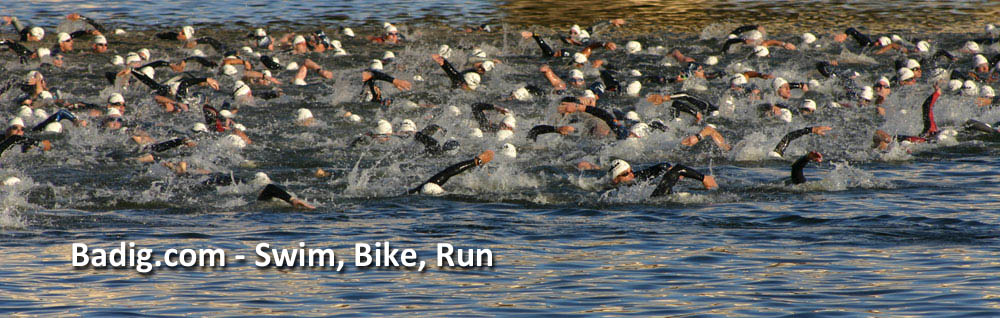
First Ironman? Never started swimming with 2500 people all at once? Scared out of your mind? Let me help. I will be there putting on a swim clinic to help you get through the most intimidating part of the Ironman. We will go over all sorts of things, from the mass start to navigating tips, pacing, conditions, and strategies to get you to Town Green Park and off on your bike.

Swim Shops will also be on hand with the WTC legal #1 selling TYR Torque, goggles tri gear, and anything else you might need.

Try not to miss it because THIS IS YOUR ONLY CHANCE TO SWIM IN LAKE WOODLANDS BEFORE RACE DAY. Lake Woodlands is a private lake that doesn’t allow swimming. If you try to swim the lake on your own you will be arrested. Trust me on this one. I’ve lived here for 30 years, and they are serious when they say “No Trespassing”.

To sign up for the clinic or the swim, go to:http://activenet11.active.com/wcscparksandrec/ and search “triathlon”

Open water swim 2011 flyer

Also posted in Open Water Swimming, Swimming | Tagged , , , , , , , , | 1 Comment

Quality vs. Quantity

People often talk about ‘junk miles’ in endurance sports, referring to the volume you put in swimming, cycling or running that is done at a low to moderate effort and seemingly has no particular adaptation or point to it. Many coaches out there market themselves as coaches that cut out the junk work, and focus on quality over quantity.  Sounds great doesn’t it? I mean who wants junk? And quality certainly sounds better than all that yucky quantity, so sign me up!

The problem is that if you want to compete in endurance sports, then quantity (or volume) IS quality.  Let’s face it, the basis of our racing is quantity. Heck our sport is used as a punchline when referring to extreme endurance. So let’s split the triathlon up and look at the best in the three individual sports to see how much they train. Then we’ll circle back around to the triathlon sport as a whole.

Swimming – Outside of open water swimming, most of the events in competitive swimming are relatively short compared to the other two sports in triathlons.  Swimming also has an enormous emphasis on technique; something the other two sports don’t really have to worry about. Having said that, because the low impact/ low stress nature of swimming, you will see the highest training volume to racing distance ratios. Just look at Olympians Ryan Lochte, Michael Phelps, and even sprinter Alain Bernard.

Lochte has mention that regular training for him is around 100,000 meters per week. Phelps was training 90,000 meters per week as early as age 11 and well above that now. And Bernard? the 100 meter sprint champion? You got it. 100,000 meters per week for a race that lasts less than 50 seconds.

Cycling – While an incredible amount of volume is done to compete in the sport of cycling, there are usually great distances covered in the races as well. The average pro cyclist spends about 450 to 500 miles per week on the bike. Of course if your name is Lance Armstrong then you would be riding almost that much by the age of 13. Want to make the podium of a major tour? Then find a comfy saddle because you’ll be sitting on it for about 700 miles per week.

Running – fits inbetween swimming and cycling when it comes to the training volume to race distance ratio. The tricky thing with running, moreso than the other two sports, is that training durability is much more of an issue. To put it another way, because of the high impact/ high stress nature of running, large amounts of volume need to be built up very gradually so that you don’t get hurt. Having said all of that though, You would be hard pressed to find a middle distance or distance runner in the elite ranks running less than 100 miles per week. Sort of a training minimum in the world of the elite. Take Deana Kastor, marathon Olympic medalist and American record holder. When asked about her training volume in Track & Field Magazine, she responded, “We haven’t really focused as much on mileage this time around as we have on quality workouts. I was typically getting up to 140 miles per week and keeping it up there for a few weeks in a row in the past. This time, I’ve gone to about a 120 miles and feel great doing it.” Hmmmm….decreasing to a meager 120 miles per week.

Triathlon – While training for 3 sports instead of one can be a complicated task, one thing is consistant with the single event sports. Volume. Triathletes don’t do near the volume that single athletes do in their respective sports, but if you look at the training as a whole, you’ll see that top triathletes put in some very long days in their quest to be the best. Numbers you typically see are 300-400 miles on the bike, 45-60 miles running, and about 20,000+ meters in the pool.

So what is my point? Afterall, you’re not a pro and don’t have the time to spend all day training. While you may not be able to put up the huge numbers the pro’s do, the strategy should be the same. Volume first, intensity second. If you are looking to get better in triathlons, or would like to do well in an Ironman, then volume needs to be far and away your first focus. Are you going to be able to fit in 45 miles of running every week? Maybe not. But if you take a look at your training logs and you find yourself focusing your week around the track workout at the expense of the long run, or trying to fit in weights instead of swimming or cycling, then you’d be wise to reevaluate. Speed workouts are great, just make sure they don’t negatively effect the total volume. If you’re racking up 15 miles of running per week in your preparation for an Ironman, look for ways to get a little more quantity in each week, not for ways to add another speed workout in that 15 miles. No one ever gets to mile 23 of an Ironman run and wish they had done more windsprints.

Which brings me back to my initial thought. When I surf around the internet in the various forums I read a lot of training advice from triathlon coaches of all kinds. The information they offer is often all over the place. Some good, some strange, some dangerous. Many of these coaches have taken a weekend seminar and are now certified experts. Others have grabbed a book or two and after flipping through them consider themselves experienced. If the one’s that you’re looking at claim that you will get more out of short, intense workouts then all that boring volume, then start asking some questions. If they say that they don’t believe in a ‘base’ period (more on the here), you might want to get a second opinion before you open your checkbook.

I was having a conversation with a good friend of mine (and college coach) this past weekend at a championship meet and we got on a very similar discussion. When she goes to swim meets where the athletes are slower/newer, the coaches at those meets have training philosophies that are all over the board. When she goes to a national event where the faster swimmers race, the coaches are extremely similar in how they think. I think you see my point here.

Something to keep in mind the next time you’re shopping for a coach or reading all those opinions on the internet.

Good luck with your training.

Also posted in Uncategorized | Tagged , , , , | 1 Comment

The Other Activity of Endurance Training…Home Life

The other day I was discussing with a friend of mine all the various aspects of Ironman training. He is prepping for his first and I was telling him about some of the challenges that I run into. Of course the obvious aspects were discussed like long rides, nutrition, getting all the hours of training in, etc. One of those little pieces of the puzzle that isn’t always addressed in training for an Ironman is training to adapt your body to a normal family life. One of the big conflicts that people run into isn’t the long hours on the bike or running, but the long hours spent sleeping or on the couch after the training. Your spouse and/or family have to sacrifice when you prepare for an Ironman as well, since you spend a lot of time away. I think that the bigger problem, that can quickly wear people’s patience out and start fights, is how you act when you’re not training. People expect you to be gone more when they agree to let you do an Ironman. What they don’t expect is for you to be a zombie when you are home. In order to keep the peace, this needs to become part of your training. When you get home Saturday afternoon from the 5 hour ride, you need to be able to hop in the shower and continue on a normal day with your family. This is going to take some time to adjust to and may, from time to time, cause you to adjust how you train. In the end, though, you will have a more supportive home life and hopefully the blessing to continue this sport you love so much. So the next time you are 95 miles into your 100 mile ride, don’t think of it as 5 miles to go. Think of it as 5 miles until you transition into an energetic person at home who is happy to go to the mall or out for a lunch with your spouse. They did, after all, just let you spend half a day doing what you wanted, right?

 Happy Training.

Also posted in Uncategorized | Tagged | 1 Comment

Pay No Attention to that Man Behind the Curtain

I was filming a friend of mine the other day (his post is in the hopper) and he thought that I should post my own swimming as a point of reference for others. While I have posted myself on here swimming before, I will admit it has been a while, so if you haven’t been hanging around here very long, you probably haven’t seen any of them. So here are a few shots of me making my way up and down the pool.

I don’t really feel like picking apart my own stroke in any great detail, but I will admit that my stroke does have flaws. Since I don’t slow down the video or point any of them out, most of you won’t see too many of them though. That works just fine for me, because if I let you peek behind the curtain to see the real wizard, then you won’t tap your ruby slippers together anymore…

From under the water:

Above View:

Head On:

See ya at the pool.

Also posted in Swimming, Swimming Technique | Tagged , , , | 3 Comments